Understanding why routine vaccination stalled in northern Nigeria requires a look at what happens on the back roads of Sokoto.
Failure is rarely a case of vaccines going missing at the state’s cold stores. More often, the breakdown happens on the roads. Health workers lack the travel stipends to reach distant villages, or they arrive only to find families absent for the day, or they lack ice packs to keep the vials cold.
For years, immunisation efforts across Sokoto’s vast landscape were disjointed. Polio teams and other routine vaccination staff operated in their own separate worlds. They drove to the same towns on different days, followed completely different maps, and unwittingly bypassed the exact same isolated settlements month after month. When the state officials tried to track progress, they relied on paper reports that took weeks to arrive and hid gaps in coverage.
Since January 2026, Sokoto has been undergoing an immunisation turnaround. By changing how it maintains cold chains, holds frontline staff accountable, and manages information, families are finally seeing the benefits.
Replacing paper trails with real-time visibility
The first breakthrough came by replacing slow, paper-based reporting with real-time visibility. In the past, health managers had no way of knowing whether an outreach team visited a remote settlement or just ticked a box on a form. By providing supervisors with mobile tracking apps, health leaders got a live view of what’s happening on the ground. Instead of reading monthly summaries, a state or LGA manager could glance at a phone screen and see which remote communities were being missed.
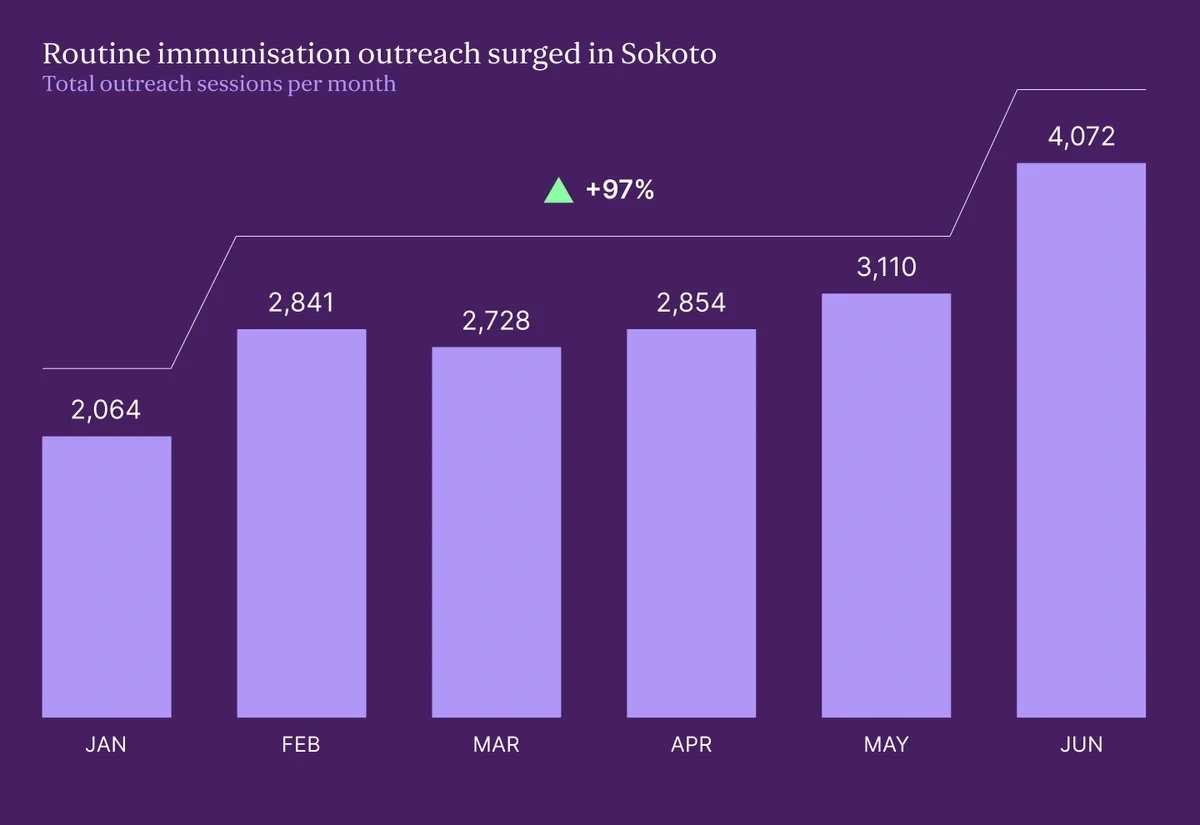
Sokoto tied this digital tracking directly to performance-based allowances. Vaccinators now log each visit on an app that captures precise GPS coordinates. Stipends are released only when a visit is verified on the ground. The impact in Sokoto was immediate, as health facilities completing their planned visits to communities jumped from 44 per cent in January 2026 to 87 per cent in June 2026.
Fixing cold chains and connecting teams
Live tracking means very little if health facilities cannot preserve their vaccines. Before a team of vaccinators hits the road, they need a way to keep the doses chilled. That’s why the government authorised the repair of 100 vaccine refrigerators across the state.
Health teams also started sharing information. Previously, the teams running polio campaigns and teams giving routine vaccines worked separately, using different lists of villages. When managers compared the two lists, they realised that 539 settlements across Sokoto were being missed by routine vaccination visits. By combining their maps and schedules, health workers could go directly to these missed communities and ensure those children were vaccinated.
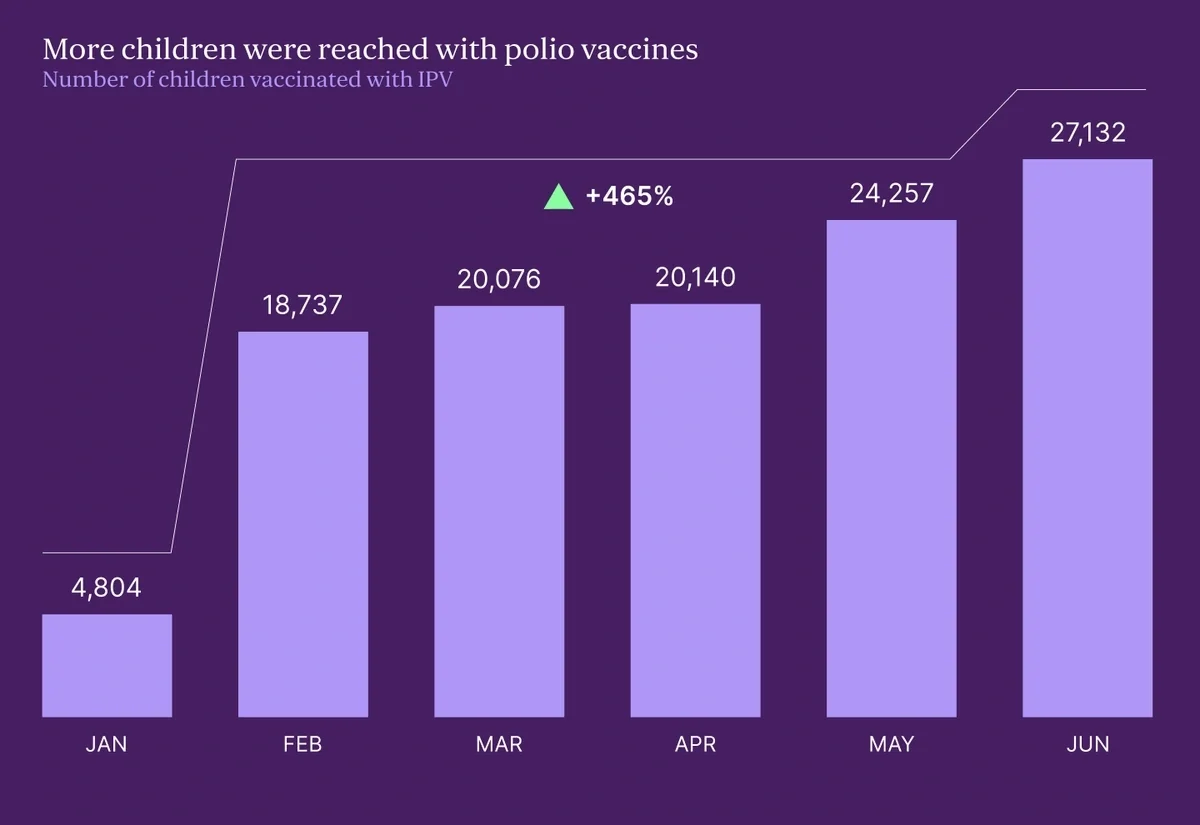
Between January and June 2026, the number of children receiving polio vaccines increased from just over 4,800 monthly to more than 27,100. That’s a 465% improvement in just six months.
Sokoto proves that reaching underserved communities doesn’t require a massive new budget – it simply requires the real-time visibility and local accountability to make every journey count.