In Kano State, Nigeria, thousands of children remained “zero-dose” despite living within reach of a health facility. We explore why, and how we are helping the government fix it.
In July 2025, a senior public health leader in Kano, Nigeria, sat before a screen flashing red. The data revealed an uncomfortable truth: two urban areas, where clinics are most densely packed, were failing to reach children.
This was Kano’s “red data” moment. It exposed the Proximity Paradox – the reality that access exists on paper, but services aren’t reaching the doorstep. Within 24 hours of that meeting, a radical shift in strategy began.
The assumption that didn’t hold
Nigeria delivers vaccines to citizens via health facilities and remote outreach sessions, where vaccinators visit communities far from facilities. While governments often prioritise outreach for distant, rural areas, data from Kano revealed a counterintuitive trend: many unvaccinated (“zero-dose”) children lived within two kilometres of a health facility.
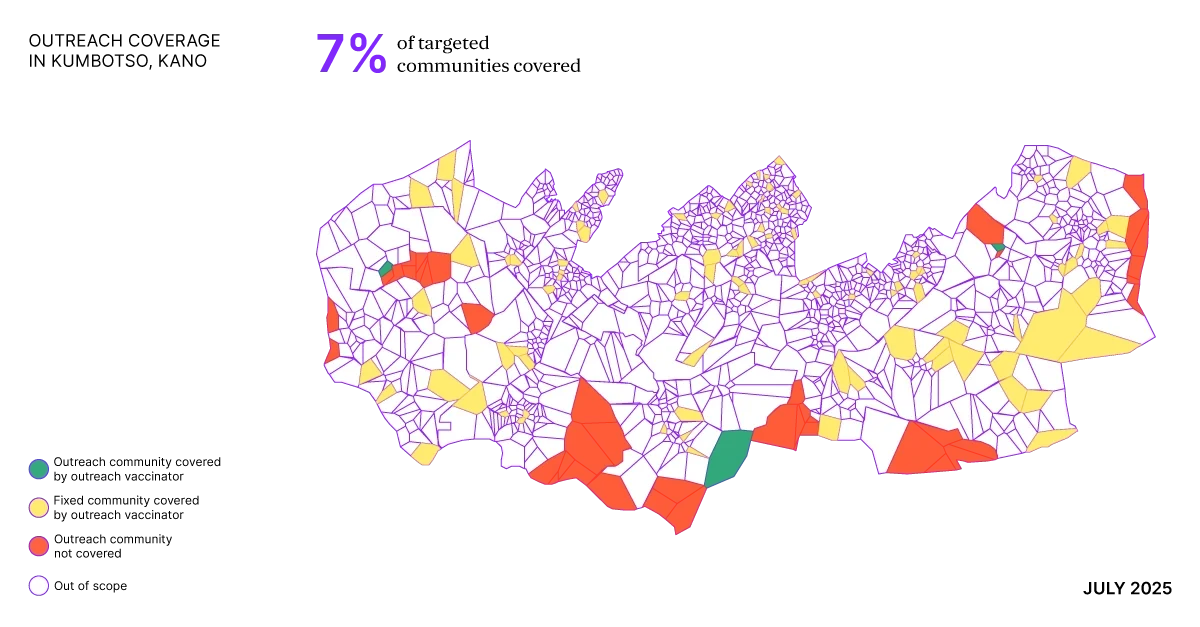
By July 2025, outreach coverage in these high-risk areas was only 6%. The reason? Vaccine shortages, broken cold chains, and poor performance tracking. It became clear that where fixed sites are not functional, outreach cannot succeed either.
The “red data” moment that unlocked action
Kano’s real turning point came from a single monthly routine immunisation stocktake. When the performance data showed those two urban Local Government Areas (LGAs) in red, the Director General’s response was immediate. He instructed his colleagues mid-meeting to convene the local teams the very next day with a mandate to explain the low performance and identify what would change.
That next-day meeting triggered a chain reaction. Once the conversation moved from defensiveness to problem-solving, real issues surfaced, such as gaps in familiarity with digital tools. This led to rapid retraining for immunisation officers and a reset of performance expectations. What mattered wasn’t blame – it was speed and clarity.
Turning visibility into results
From that point on, performance reviews became the heartbeat of the operation. Monthly stocktakes and bi-weekly reviews created a consistent feedback loop that kept issues visible and action timely.
Instead of spreading efforts thinly, the team intensified support in the underperforming LGAs:
-
Microplans were reviewed to ensure every settlement was covered.
-
Vaccinators were guided directly to specific settlements.
-
Vaccine storage was fixed to ensure supply remained potent.
-
Supervisors monitored activity daily, resolving logistical issues as they emerged.
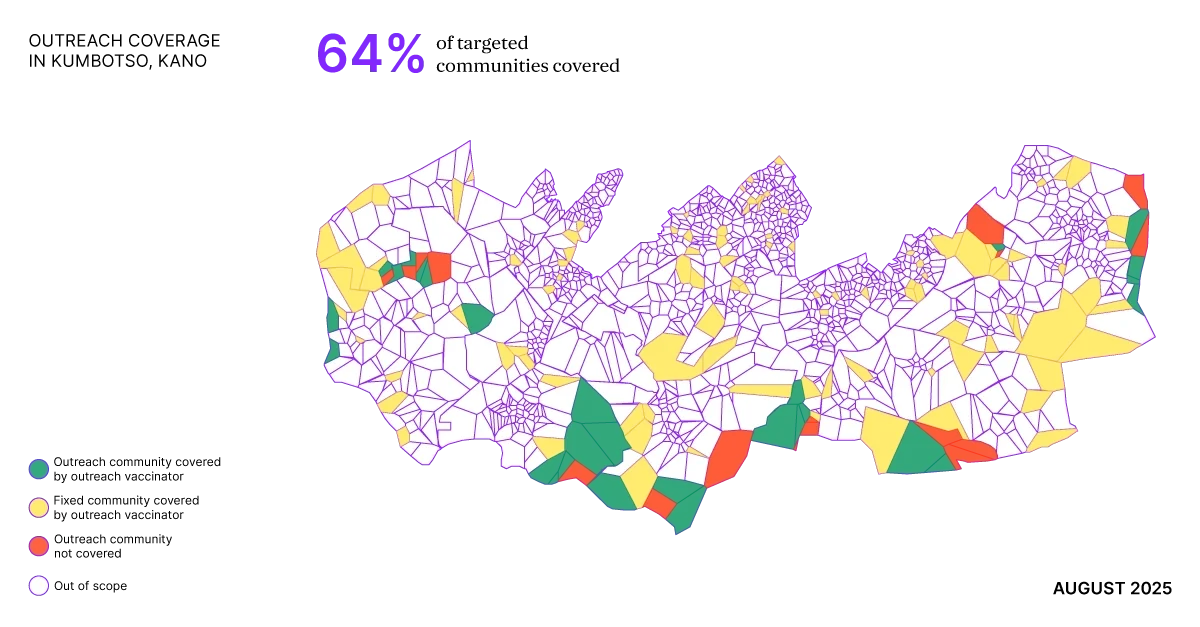
The results were instant. Outreach coverage jumped from 7% to 64% in one LGA and 7% to 54% in the other within just a single month. By focusing on these small details, Kano began creating a functioning system that truly served its citizens.
Wider impact
Kano’s success is now influencing the rest of Nigeria. Prioritising the functionality of fixed sites first is a mindset shift that is being replicated across other northern states.
When data exposes the gap and local leaders take ownership, change doesn't just happen – it happens fast.
To learn more about how we help governments improve delivery, read our recent piece about reaching children hidden in plain sight in the DRC.